EPU5 – HealthTech Regulation in Tunisia: Insights from FMM × HCI
Written by

How can Tunisia shape a HealthTech regulatory framework that enables innovation while protecting patients? A postgraduate panel co-hosted by the Faculty of Medicine of Monastir (FMM) and HealthCare Innovation (HCI) examined gaps, costs, and feasible reforms to accelerate compliant growth in digital health, medtech, and biotech.
Context & Participants
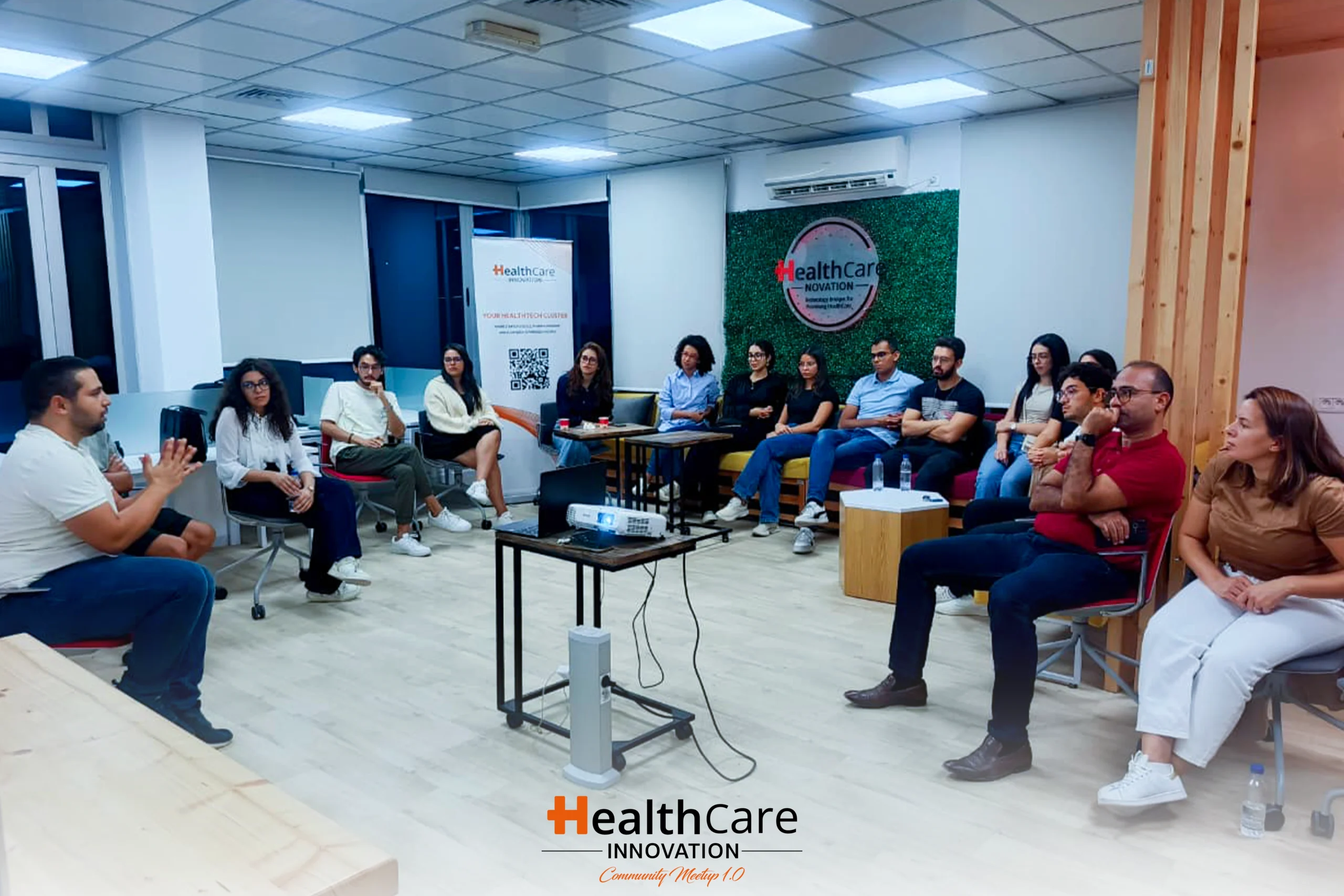
Held on 2 March 2024 in the ceremonial auditorium of the Faculty of Medicine of Monastir (FMM), the session brought together 100+ clinicians, researchers, administrators, and students across Monastir, Sousse, Mahdia, and Tunis.
Why Regulation Matters for HealthTech
Predictable, risk-based regulation is essential for adoption and market access. The EU Medical Devices Regulation (MDR 2017/745) sets requirements for CE marking in Europe, while the U.S. FDA oversees market authorization in the United States. Data protection frameworks such as the GDPR govern privacy and security for digital health.
Global public-health bodies like the WHO emphasize governance, workforce skills, and interoperability as enablers of safe digital health adoption.
Key Challenges Identified
- Regulatory gap on medical devices supervision and safety; need for clearer guidance and timelines.
- High CE-marking costs that vary by device class (from tens of thousands to several hundred thousand euros).
- Limited local accreditation capacity for testing and conformity assessment, constraining time-to-market.
- Small domestic market dynamics (e.g., online payments) and capital controls deterring foreign investment inflows.
- Slow promulgation and enforcement, creating uncertainty for innovators and investors.
Pragmatic Recommendations for Tunisia
1) Start with the Target Market & Risk Class: plan the product roadmap against EU MDR and/or FDA pathways; define intended use, clinical evaluation needs, and evidence from day one.
2) Build Compliance-by-Design: align early with data protection (GDPR), cybersecurity hygiene, and quality management (e.g., ISO 13485 contexts).
3) Strengthen Local Testing & Accreditation: create or upgrade labs to support verification/validation and reduce reliance on foreign facilities.
4) Reduce Cost Barriers: deploy earmarked grants or guarantees to co-finance CE marking for startups; explore regional or pan-African schemes.
5) Enable PPP & Clearer Guidance: publish practical playbooks and timelines for pilots in hospitals, with transparent review gates.
6) Think Euro‑Med & Africa Early: design for multi-market compliance and distribution; leverage diaspora expertise and partnerships.
7) Update Legislation with a HealthTech Lens: consider dedicated taskforces and ministerial coordination to keep pace with innovation.
Best Practices & Technology Categories
- Categorize innovations by domain: HealthTech, MedTech, BioTech, and Deep Tech; tailor risk and evidence accordingly.
- Combine rapid prototyping with staged certification: prototype locally, document evidence, then seek CE/FDA while building brand and partnerships.
- Consider setting up abroad (e.g., UK/EU) for investment access while maintaining R&D roots in Tunisia.
HCI Resources
Accelerating Innovation in HealthTech → https://healthcareinnovation.tn/accelerating-innovation-in-healthtech/
Startup Programs → https://healthcareinnovation.tn/service/startups/
Pharma & Medical Device Regulatory Services → https://healthcareinnovation.tn/service/pharma-medical-device/
Experts Network → https://healthcareinnovation.tn/experts/
Community Overview → https://healthcareinnovation.tn/community/
External Citations
EU MDR overview — European Commission: https://health.ec.europa.eu/medical-devices-regulatory-framework/overview_en
FDA medical devices — U.S. FDA: https://www.fda.gov/medical-devices
GDPR guide — GDPR.eu: https://gdpr.eu/
WHO Global Strategy on Digital Health: https://www.who.int/publications/i/item/9789240068891
FAQ
Q: What makes CE marking so expensive for startups?
A: Costs combine notified body fees, testing, documentation, and clinical evaluation—scaling with device class and complexity.
Q: How can Tunisia reduce time-to-compliance?
A: Expand accredited testing capacity, publish hospital pilot playbooks, and co-finance certification steps for early-stage innovators.
Q: Should founders wait for perfect regulations before building?
A: No—prototype and generate evidence while tracking EU/FDA pathways; iterate with hospitals and research labs, then certify.
Q: Where can I get support?
A: Engage with HCI’s Startup Programs, the HCI Experts Network, and HCI Regulatory Services.