EPU4 – Networking & Ecosystem Synergies for Tunisian HealthTech (FMM × HCI)
Written by

How can Tunisia turn its HealthTech potential into scalable startups? A joint postgraduate session by the Faculty of Medicine of Monastir (FMM) and HealthCare Innovation (HCI) explored how networking and ecosystem synergies drive real outcomes—from clinical validation to international market entry.
Context & Panel
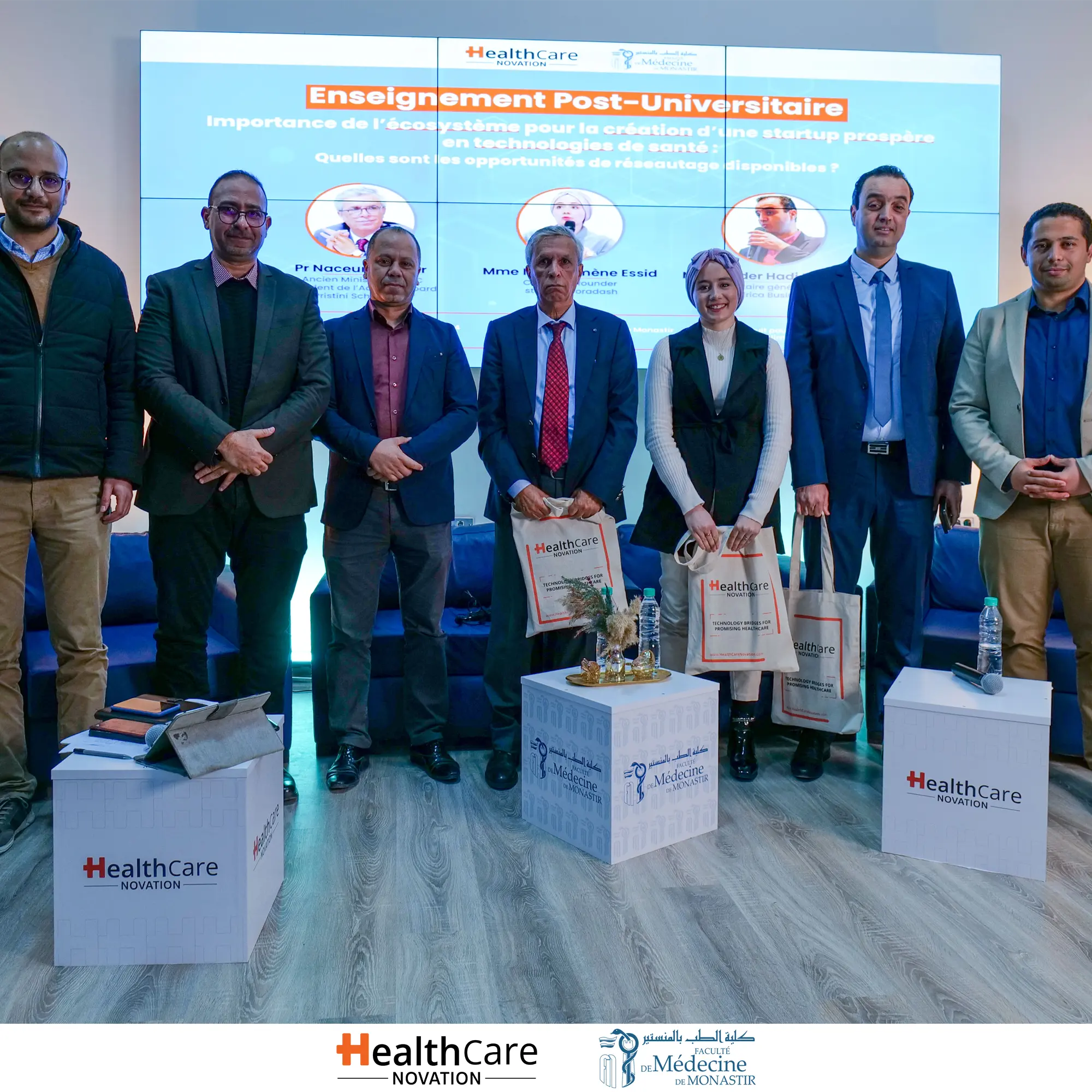
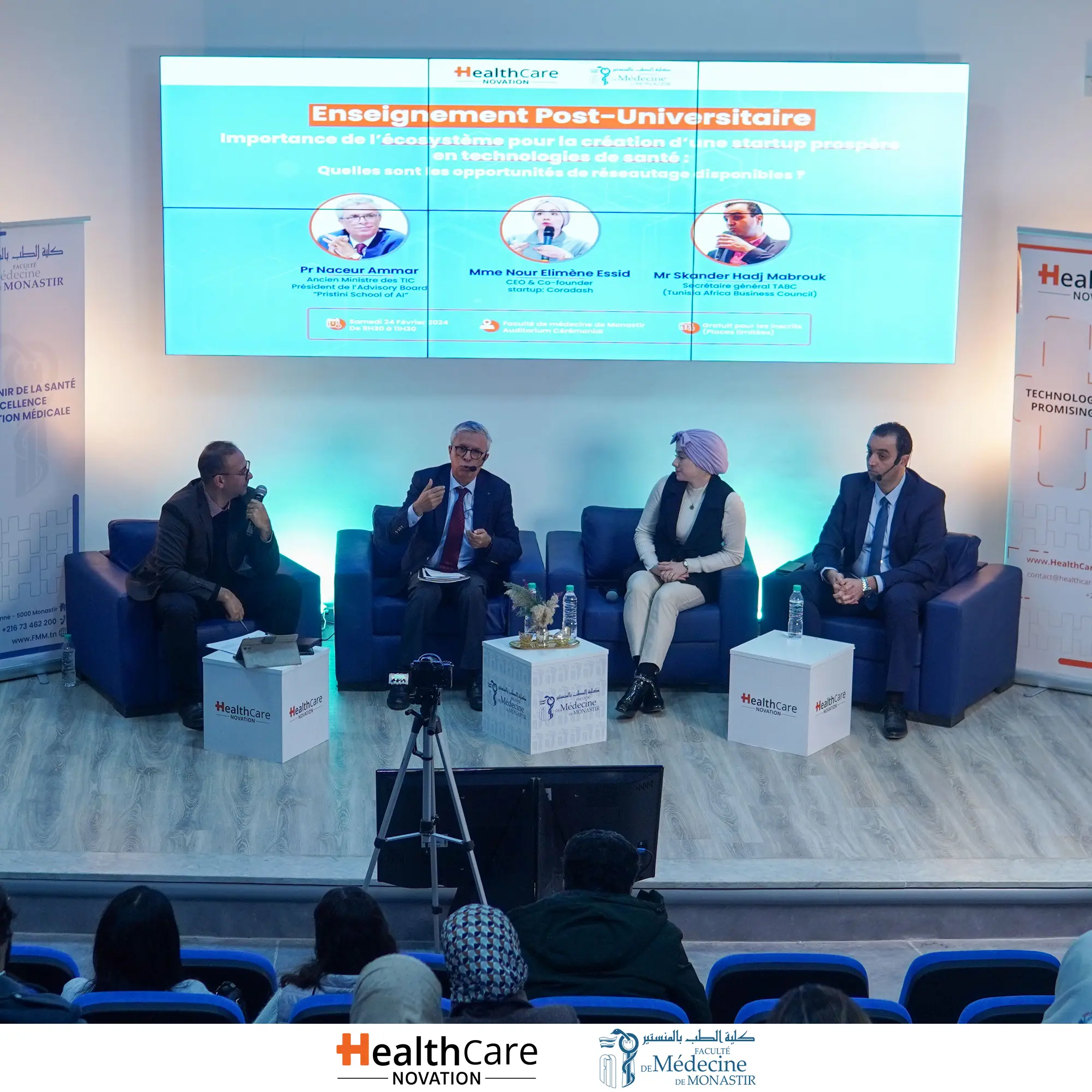
Held on 24 February 2024 in the ceremonial auditorium of the Faculty of Medicine of Monastir (FMM), the panel drew 100+ participants from university hospitals in Monastir, Sousse, Mahdia, and Tunis, plus students in medicine, pharmacy, and computer science.
Speakers included: Prof. Naceur Ammar (École Polytechnique de Tunisie; ESPRIT; ESPRIT School of Business; SUP’COM; former ICT Minister; now at Pristini Knowledge Group), Ms. Nour Elimène Essid (founder & CEO of the connected ECG patch startup Coradash), Mr. Skander Hadj Mabrouk (CEO, Business Solutions; Secretary-General at Tunisia Africa Business Council (TABC) – Sahel; founder of Hadrumète Business Angels), and Mr. Slaheddine Dardouri (panel moderator; management & innovation coach).
Build the HealthTech Value Chain with Partnerships
- Modernize the legislative and regulatory framework to keep pace with innovation (e.g., exchange law updates, Startup Act 2.0).
- Reactivate and strengthen public–private partnerships (PPP) across universities, hospitals, and startups.
- Mobilize the diaspora: channel expertise and capital from expatriates back into Tunisia via structured programs.
Compete Internationally: Presence, Partnerships, and Priority Markets
- Build presence or strong partnerships in Europe, the Middle East, and Africa to avoid being confined to a narrow local market.
- Prioritize English-speaking African markets where appropriate—e.g., Nigeria, Kenya, and Egypt—while coordinating among Tunisian exporters.
- Use targeted instruments such as euro/dinar seed funds and credible acceleration programs for internationalization.
Validate Clinically: University–Startup Collaboration
- Co-develop validation with universities and research centers; train students in AI and digital health to meet clinical needs.
- Engage sub-Saharan students as market ambassadors; foster study-and-work opportunities in Tunisia to deepen Africa ties.
- Encourage research spin-offs by clinician–researchers to translate lab results into marketable solutions.
Skills & Culture: Versatility and Lifelong Learning
- Break down academic silos: allow flexible student mobility across disciplines to nurture HealthTech entrepreneurship.
- Promote lifelong learning so founders stay current on technology, markets, and business practices.
- Build versatility across hardware, AI, and software to manage complex, multidisciplinary startups.
Practical Levers & Programs
- Business Angels & Investor Networks: engage with regional groups such as TABC and local angel communities to unlock expertise and capital.
- Seed Funds with multi-currency options can accelerate internationalization.
- Global accelerators and academic partnerships provide mentorship and networks for scale.
HCI Resources
Accelerating Innovation in HealthTech → https://healthcareinnovation.tn/accelerating-innovation-in-healthtech/
Startup Programs → https://healthcareinnovation.tn/service/startups/
Pharma & Medical Device Regulatory Services → https://healthcareinnovation.tn/service/pharma-medical-device/
Experts Network → https://healthcareinnovation.tn/experts/
Community Overview → https://healthcareinnovation.tn/community/
External Citations
OECD — Digital Health Overview: https://www.oecd.org/health/digital-health.htm
WHO — Global Strategy on Digital Health (2020–2025): https://www.who.int/publications/i/item/9789240068891
FAQ
Q: What networking moves matter most for Tunisian HealthTech startups?
A: Formalize PPPs with universities and hospitals, engage angel networks (e.g., TABC), and build partnerships in priority African markets to speed validation and revenues.
Q: How can academia fuel startups?
A: Break down silos, enable student mobility, foster spin-offs, and integrate AI/digital health training into clinical contexts.
Q: How do we avoid being stuck in a local niche?
A: Establish presence or strong partnerships in key regions and leverage seed funds/accelerators geared for internationalization.
Q: Where can I find support?
A: Explore HCI’s Startup Programs, the HCI Experts Network, and HCI Regulatory Services.