EPU2 – Validating HealthTech Innovation: Lessons from FMM × HCI
Written by

How do startups turn promising ideas into clinically credible products? The Faculty of Medicine of Monastir (FMM) and HealthCare Innovation (HCI) convened a second postgraduate session to translate real‑world experience into a practical playbook for Tunisia’s HealthTech ecosystem.
This article condenses the panel’s insights into actionable steps for conceptualization, validation, funding preparation, and collaboration frameworks—helping teams reduce risk and accelerate adoption.
Context & Panel
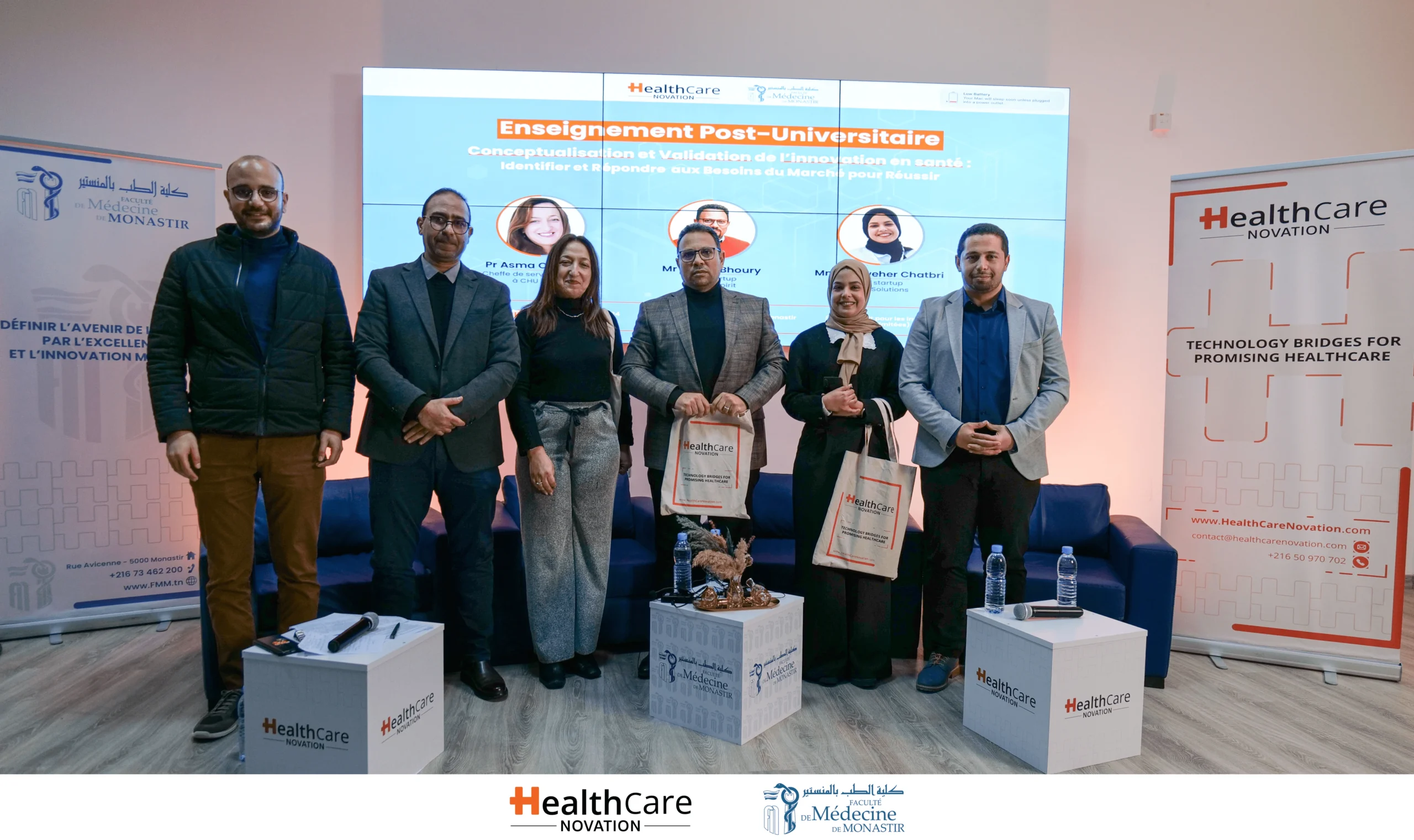
Held on 10 February 2024 in the ceremonial auditorium of the Faculty of Medicine of Monastir (FMM), the session gathered 100+ participants from regional university hospitals and HealthTech actors. Panelists included practitioners and founders sharing firsthand validation journeys.
Why Validation Matters
HealthTech projects often stall between prototype and clinical use due to unclear validation pathways and fragmented collaboration. According to the OECD, digital health ventures face scale‑up frictions, while the WHO Global Strategy on Digital Health underscores governance, workforce capability, and interoperability as critical enablers.
Insights → Actionable Steps
1) Learn from Experience‑Backed Validation Paths:
- Engage early with research labs and hospital departments to co‑design testing protocols and access instrumentation.
- Prototype with a clear risk‑reduction plan and generate objective test evidence before fundraising.
2) Use Practical Collaboration Frameworks (Universities × Hospitals × Startups):
- Co‑author proposals between research labs and startups for pilot studies and validation.
- Leverage student final‑year projects to scope needs and build proof‑of‑concepts.
- Where implementing regulations lag, align under existing, recognized institutional frameworks to keep projects moving.
3) Prepare for Funding with Evidence:
- Document validation results, user feedback, and safety data to improve investor negotiations.
- Present a credible team structure and milestone plan tied to validation gates.
4) Build an Innovation Culture in Care Settings:
- Create clinician–startup working groups (e.g., junior HU assistants with founders).
- Provide continuous training in entrepreneurship, regulatory basics, and data practices.
- Enable the next generation to lead high‑value projects with structured mentorship.
5) Bridge Equipment and Speed Gaps:
- Co‑design affordable research tools and validation rigs locally to reduce dependency and costs.
- Use stepwise pilots to de‑risk adoption while building institutional know‑how.
HCI Resources
Accelerating Innovation in HealthTech → https://healthcareinnovation.tn/accelerating-innovation-in-healthtech/
Startup Programs → https://healthcareinnovation.tn/service/startups/
Pharma & Medical Device Regulatory Services → https://healthcareinnovation.tn/service/pharma-medical-device/
Experts Network → https://healthcareinnovation.tn/experts/
Community Overview → https://healthcareinnovation.tn/community/
External Citations
OECD — Digital Health Overview: https://www.oecd.org/health/digital-health.htm
WHO — Global Strategy on Digital Health (2020–2025): https://www.who.int/publications/i/item/9789240068891
FAQ
Q: How can a startup validate a prototype in Tunisia?
A: Co‑design tests with hospital departments and research labs, run short pilots, and document outcomes to meet regulatory and investor expectations.
Q: Which collaboration models work best?
A: Joint lab–startup proposals, student project pipelines, and recognized institutional frameworks that formalize roles and responsibilities.
Q: What should founders prepare before meeting investors?
A: Evidence of validation, a stepwise plan with clear milestones, and a capable team aligned to clinical needs.
Q: Where can I find support?
A: Explore HCI’s Startup Programs, the HCI Experts Network, and HCI Regulatory Services.