EPU1 – Tunisia’s HealthTech Investments (FMM × HCI)
Written by

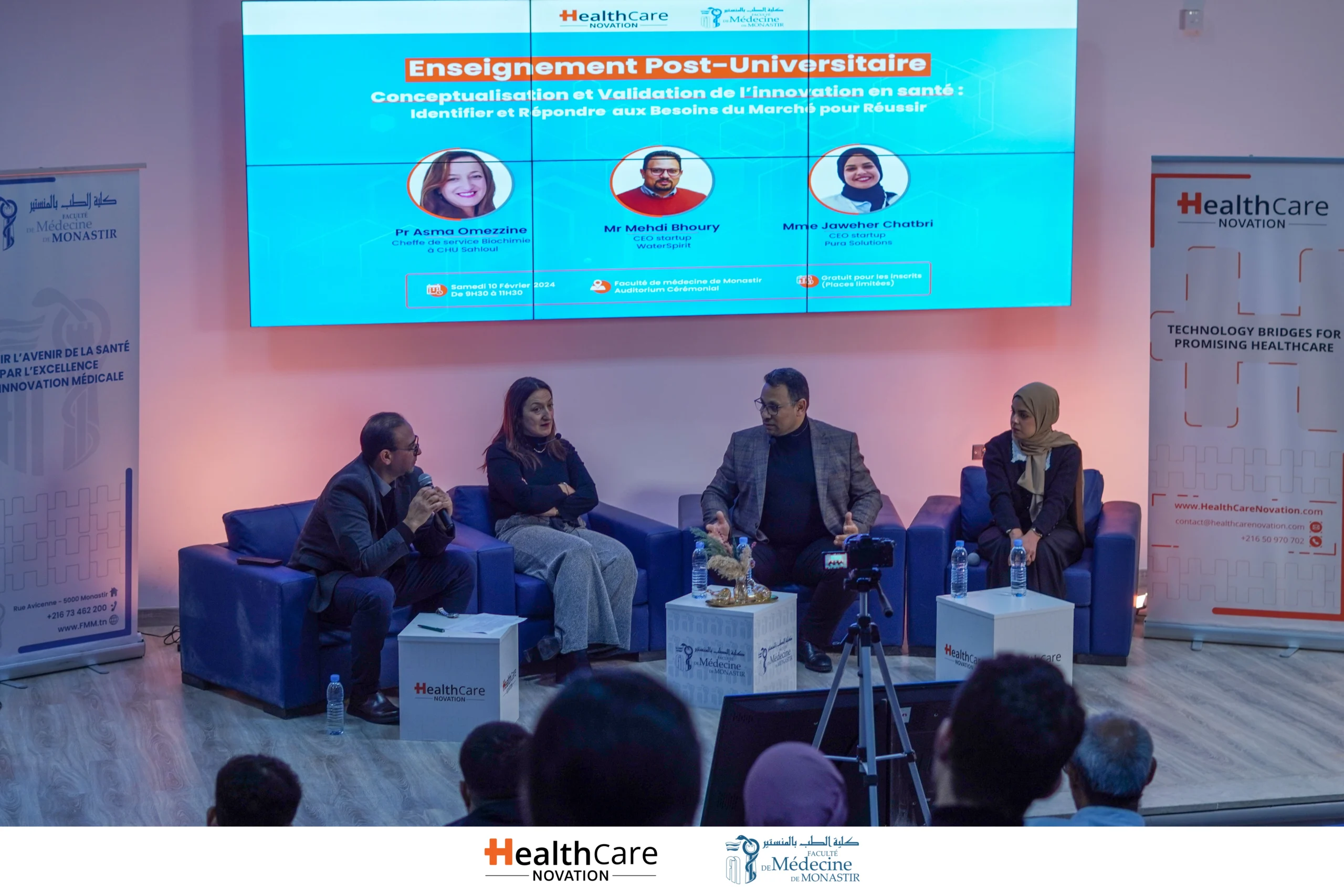
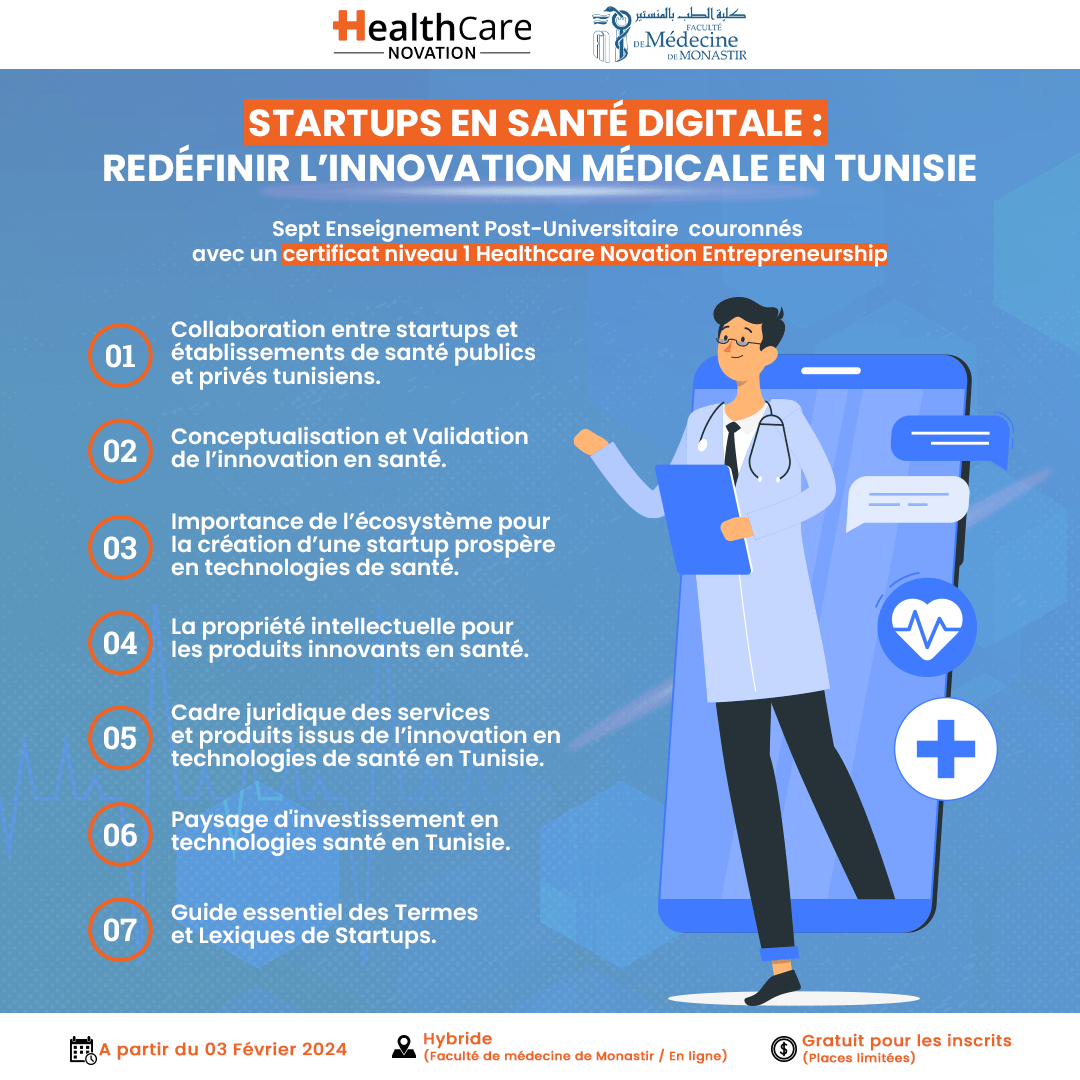
What does it take to finance early-stage HealthTech in Tunisia? The morning panel hosted by the Faculty of Medicine of Monastir (FMM) and HealthCare Innovation (HCI) explored the investment landscape for startups and charted realistic paths from idea to market.
This article distills that discussion into practical steps—covering financing types, common bottlenecks, and high-impact levers founders can use to improve survival and scale-up.
Context & Audience
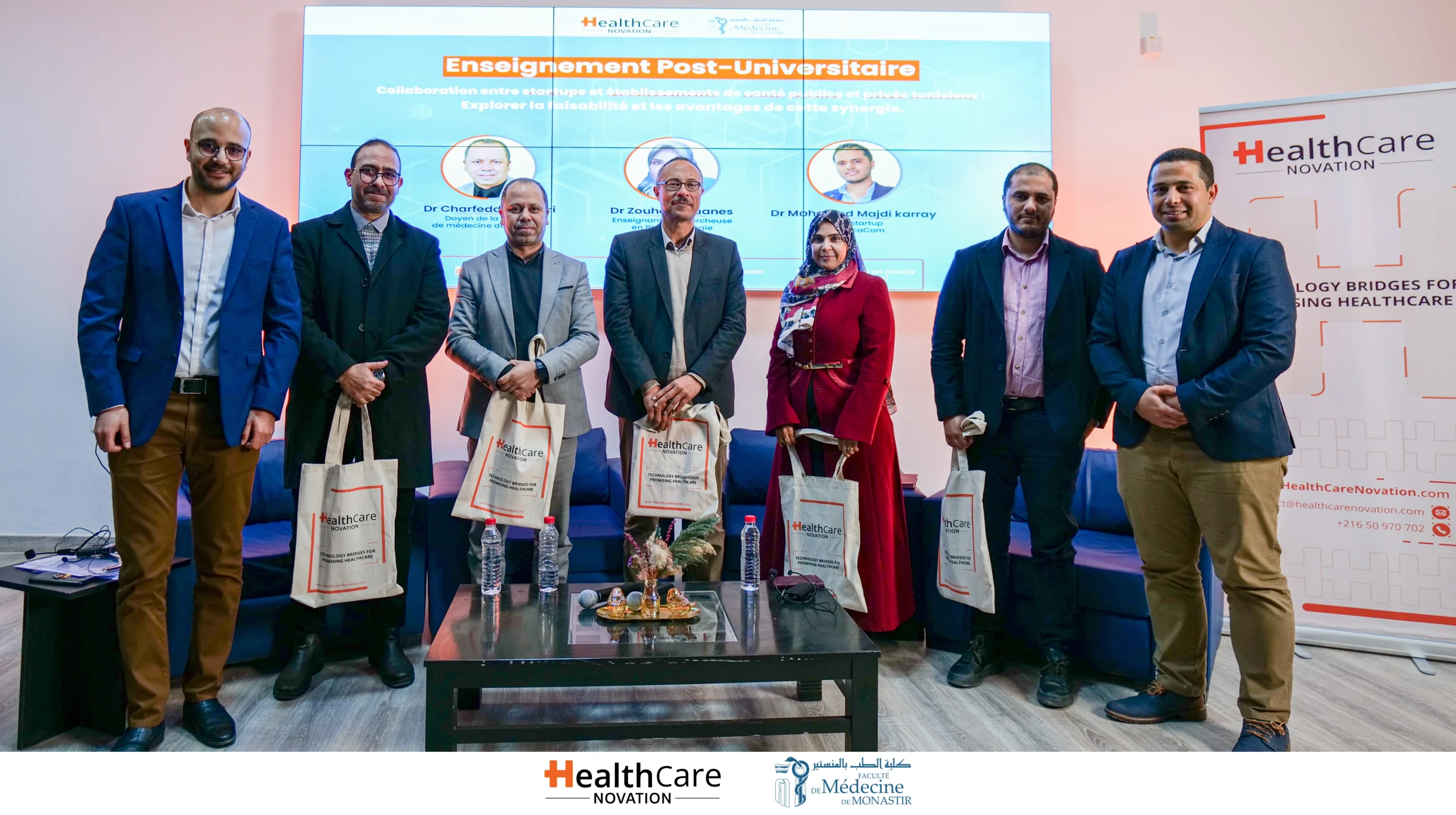
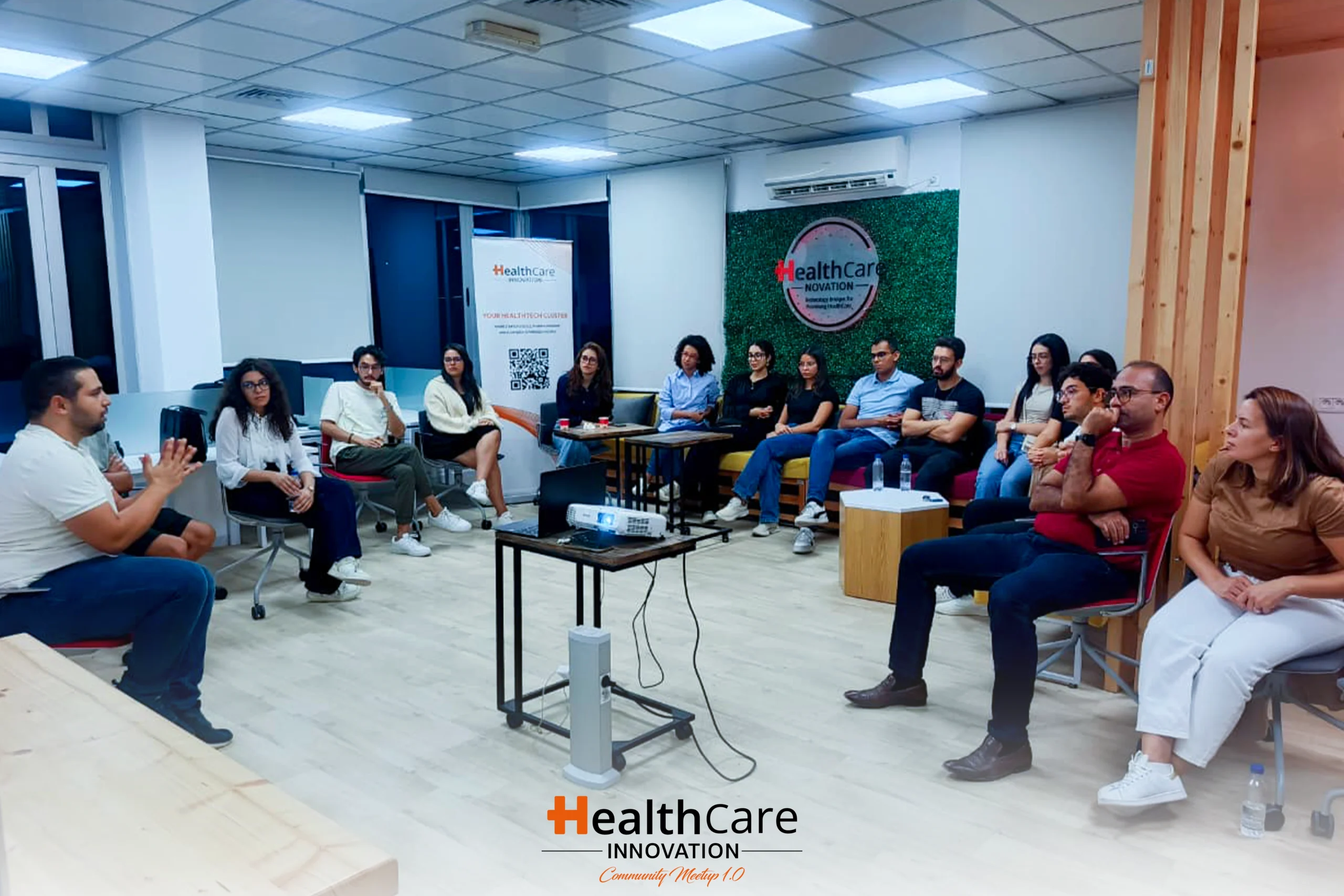
The session gathered 160 participants, including assistants and professors from university hospitals across Monastir, Sousse, Mahdia, and Tunis, as well as students in medicine, pharmacy, and computer science.
Why Funding HealthTech is Hard—and What to Do
Bank lending alone rarely fits innovative ventures; alternative instruments are crucial. According to the OECD’s digital health analyses, scale-up frictions are common, and the WHO Global Strategy on Digital Health highlights governance and workforce capacity as key enablers.
Financing Types: Traditional & Alternative
- Bootstrapping & Pre-sales — Extend runway with customer validation and early revenues.
- Incubators & Seed Funds — Access mentoring and small tickets to reach prototype maturity.
- Crowdfunding — Build a community of early adopters while raising capital; timelines typically range 3–4 months.
- Business Angels (BA) — Sector-savvy investors who bring expertise, lab access, and networks.
- Venture Capital & Private Equity — Increasing specialization; fit improves as traction and validation grow.
Obstacles Slowing Valorization & Scale
- Data governance barriers (GDPR-like constraints, sovereign cloud requirements).
- Insurance alignment lagging behind digital health innovation.
- Funding gaps between prototype and market, despite national startup funds.
- Limited late-early stage financing, pushing scale-ups to expand abroad.
Levers to Improve Startup Survival
- Assemble a strong founding team and advisers; document governance and track record.
- Publish research with clinicians to validate innovation and signal credibility.
- Focus on clear business models, market sizing, and a realistic path to revenues.
- Build access to rare expertise (clinical, regulatory, data) and formalize it in agreements.
- Use portfolio logic for investors: diversification, risk management, impact, and tax advantages.
Practical Guidance for Founders
- The best fundraising strategy can be not to fundraise: bootstrap, pre-sell, and retain strategic equity.
- Structure validation cycles to shorten time-to-proof; use hospital collaborations and lab testing.
- Map a stepwise financing path: own funds → incubation/seed → specialized funds as traction grows.
What Early Investors Look For
- Team quality, clarity of roles, and governance.
- Evidence of need–solution fit and early customer validation.
- Quality of innovation and defensibility.
- Transparent documentation and milestones tied to validation gates.
HCI Resources
Accelerating Innovation in HealthTech → https://healthcareinnovation.tn/accelerating-innovation-in-healthtech/
Startup Programs → https://healthcareinnovation.tn/service/startups/
Pharma & Medical Device Regulatory Services → https://healthcareinnovation.tn/service/pharma-medical-device/
Experts Network → https://healthcareinnovation.tn/experts/
Community Overview → https://healthcareinnovation.tn/community/
External Citations
OECD — Digital Health Overview: https://www.oecd.org/health/digital-health.htm
WHO — Global Strategy on Digital Health (2020–2025): https://www.who.int/publications/i/item/9789240068891
FAQ
Q: What are realistic funding routes for a HealthTech startup in Tunisia?
A: Start with bootstrapping and pre-sales, add incubation/seed, and engage Business Angels; prepare to access specialized funds after clinical validation.
Q: Why do many startups expand abroad at later stages?
A: Local late-early financing is limited; scaling often requires larger tickets and policy alignment available in other markets.
Q: How can founders de-risk early?
A: Co-design pilots with hospitals and research labs, publish results with clinicians, and document milestones tied to validation.
Q: Where can I get support?
A: Engage with HCI’s Startup Programs, the HCI Experts Network, and HCI Regulatory Services.